|
|||||
|
|
|||||
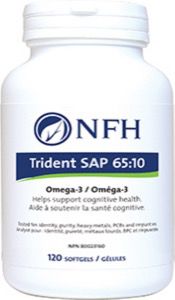
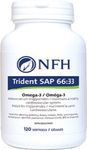
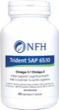
• Trident 65:10 can be used for the treatment of mild to moderate depression.
• Trident 65:10 can be used to help prevent and treat postpartum depression
in women.
• Trident 65:10 may be helpful as an adjunctive treatment for patients with bipolar disorder.
Each softgel contains:
EPA... 650 mg
DHA... 100 mg
Contains no : Preservatives, artificial flavours or colours, soy, corn, wheat,
gluten or dairy.
Depression can affect people at any life stage. An individual suffering from depression can experience a variety of symptoms that may include: fatigue, difficulty concentrating, change in appetite, irritability, agitation, withdrawal, insomnia or excessive sleeping, and in some cases, thoughts of death.(1) The cause of depression is still unknown, but it is thought that imbalances in neurotransmitters or chemicals in the brain contribute to symptoms.(1) Several pharmaceutical agents can be used to treat depression; however, many of them possess unwanted, negative side effects. Fish oil, and more specifically EPA, has been extensively researched in the role it can play for the treatment of major depression, postpartum depression, as well as potentially for bipolar disorder.
PURITY AND CLEANLINESS Third-party testing is performed on Trident 65:10 to ensure it is free of volatile organics, heavy metals, PCBs and other impurities. Certificates of analysis report no detection of heavy metals or PCBs and are in accordance with the stringent purity limits established by the Council for Responsible Nutrition (CRN) and Pharmacopeia Europa (Ph. Eur.). Depression is a condition that affects millions of people worldwide. It can affect anyone from children and adults to the elderly. For major depression to be diagnosed, a patient must report a minimum of five depressive symptoms that have been lasting for at least two weeks.(1) The Beck Inventory, or other screening tests, may also be useful for making a diagnosis of depression as well as for monitoring treatment.(1) Several studies have determined that a higher ratio of EPA to DHA is actually the most effective for the treatment of depression.
EPA FOR DEPRESSION A study by LespÉrance et al. (2010) was an 8-week trial examining the short-term efficacy of omega 3 fatty acids in patients with major depressive episodes (MDE).(2) Patients in the treatment group received 1050 mg/d of EPA and 150 mg/d DHA, with the control group receiving a placebo.(2) Researchers found that for patients with MDE, the omega 3 supplementation was superior to placebo for symptom improvement.(2) In patients with anxiety and MDE, the omega 3 supplementation was not found to be statistically significantly beneficial.(2) A study comparing omega 3 fatty acids, as monotherapy and in combination with fluoxetine, examined patients' depressive symptoms and their cortisol levels.(3) Patients received either 1000 mg EPA, 20 mg fluoxetine, or both, for 8 weeks. Plasma cortisol levels decreased in all 3 treatment groups, without a significant difference between the 3 groups.(3) This suggests that the therapeutic effect of EPA may be exerted through its ability to lower cortisol levels.(3)
DEPRESSION IN THE ELDERLY A placebo-controlled double-blinded study was performed for elderly women between 66–95 years of age with symptoms of depression.(4) Women were given either 1.67 g/d of EPA and 0.83 g/d of DHA or placebo. Results were based on an improvement in depression symptoms based on the Geriatric Depression Scale after 8 weeks of treatment. Researchers concluded that the omega 3 supplementation was effective for improving symptoms of depression as well as quality of life in elderly female patients.(4)
DEPRESSION AND CARDIOVASCULAR DISEASE The leading cause of mortality for patients with major depression is coronary heart disease.(5) Patients who have experienced a cardiovascular event are also more likely to experience major depression and an increased risk of mortality.(5) Researchers have proposed that a deficiency of omega 3 fatty acids plays a role in the pathology of both cardiovascular disease and major depression. After an acute coronary event (ACE), patients who developed depression had lower serum levels of omega 3 fatty acids than patients who did not experience depression after an ACE.(5) Prospective studies have found that the lower the dietary or membrane levels of EPA and DHA, the higher the risk for both major depression and cardiovascular disease. This area needs further research but it does provide a strong amount of evidence to warrant exploring the effect of increasing the omega 3 status of patients with cardiovascular disease or major depression.(5) EPA:DHA RATIO A study by Carney et al. (2009) examined the effect of the combination of omega 3s and sertraline for treatment of patients with depression and coronary heart disease.(6) The study was a randomized, doubleblind study where all patients were given 50 mg/d sertaline, and either 2 g/day of omega 3—930 mg EPA and 750 mg DHA—for 10 weeks, or placebo.(6) Outcome was measured using the Beck Depression Inventory and the Hamilton Rating Scale for Depression. No significant differences were noted between the groups.(6) In a study using a 1:4 ratio of EPA (420 mg):DHA (1680 mg) per day for 6 weeks in women with perinatal depression, researchers found no benefit from the therapy for these women.(7) These studies suggest that supplementation of lower ratios of EPA:DHA is not effective for the treatment of depression, and highlights the importance of high-ratio EPA:DHA omega 3 supplementation in this population. In a review article exploring the data of omega 3 supplementation and its benefit on depression, the authors investigated whether EPA or DHA or both are the beneficial component of the omega 3 supplement.(8) Of the 241 studies identified, only 28 met the inclusion criteria set out by researchers and were therefore included in the analysis. The summary of the meta-analysis found that EPA was likely more efficacious than DHA in the treatment of depression.(8) Researchers did express that further larger, well-designed, randomized controlled trials need to be conducted to confirm this finding.(8)
PERINATAL AND POSTPARTUM DEPRESSION Depression during pregnancy is quite common and treatment can be challenging. As fetal demand of omega 3 fatty acids remains very high during pregnancy, the associated decrease in the mother may leave them prone to depression.(9) A study exploring monotherapy for the treatment of depression during pregnancy was performed.(9) The study was an 8 week double-blind, placebo-controlled comparing the treatment with 2.2 g/d EPA and 1.2 g/d DHA to placebo for major depressive disorder in pregnancy.(9) At the end of the study, subjects on the omega 3 treatment had significantly lower depressive symptoms than subjects consuming the control group.(9) Also important to note was that the treatment was well tolerated and there were no adverse effects on either the women or newborns.(9) In a study in women with postpartum depression (PPD), subjects were given either 0.5 g, 1.4 g or 2.8 g/d of a 1.5:1 ratio EPA:DHA supplement for 8 weeks.(10) Women were assessed before and after treatment with the Edinburgh Postnatal Depression Scale and the Hamilton Rating Scale for Depression.(10) Before treatment, the mean scores were 18.1 and 19.1, while the after-treatment mean scores were 9.3 and 10.010. The positive results that were seen in this small trial warrant the need for further research in this population group.(10) It has emerged in the scientific literature that oral supplementation of omega 3 fatty acids in higher ratios of EPA:DHA are more effective than lower ratios for the treatment of depression. While EPA:DHA ratio may not play as important a role in cardiovascular protection or the mitigation of inflammation, there is a need for this specificity in the treatment of depression, and possibly in other mental emotional, psychological or psychiatric conditions.
Take 2 capsules daily with food or as directed by your health care
practitioner.
EPA and DHA are essential fatty acids and are classified as GRAS. Studies to date
have found no significant adverse effects
1. http://www.ncbi.nlm.nih.gov/pubmedhealth/PMH0001941/ • Viewed April 25, 2011
2. LespÉrance F, Frasure-Smith N, St-AndrÉ E, Turecki G, LespÉrance P, Wisniewski SR. “The
efficacy of omega 3 supplementation for major depression: A randomized controlled trial”. J Clin
Psychiatry. 2010 Jun 15. [Epub ahead of print]
3. Jazayeri S, Keshavarz SA, Tehrani-Doost M, Djalali M, Hosseini M, Amini H, Chamari M, Djazayery
A. “Effects of eicosapentaenoic acid and fluoxetine on plasma cortisol, serum interleukin-1 β
and interleukin-6 concentrations in patients with major depressive disorder”. Psychiatry Res.
2010 Jun 30; 178(1):112–5.
4. Rondanelli M, Giacosa A, Opizzi A, Pelucchi C, La Vecchia C, Montorfano G, Negroni M, Berra B,
Politi P, Rizzo AM. “Effect of omega 3 fatty acids supplementation on depressive symptoms and
on health-related quality of life in the treatment of elderly women with depression: a double-blind,
placebo-controlled, randomized clinical trial”. J Am Coll Nutr. 2010 Feb; 29 (1): 55–64
5. McNamara RK “Membrane omega 3 fatty acid deficiency as a preventable risk factor for
comorbid coronary heart disease in major depressive disorder”. Cardiovasc Psychiatry Neurol.
2009; 2009: 362795.
6. Carney RM, Freedland KE, Rubin EH, Rich MW, Steinmeyer BC, Harris WS. “Omega 3
augmentation of sertraline in treatment of depression in patients with coronary heart disease:
A randomized controlled trial”. JAMA. 2009 Oct 21; 302 (15): 1651–7.
7. Rees AM, Austin MP, Parker GB. “Omega 3 fatty acids as a treatment for perinatal depression:
randomized double blind placebo-controlled trial”. Aust N Z J Psychiatry. 2008 Mar; 42 (3): 199–205.
8. Martins JG. “EPA but not DHA appears to be responsible for the efficacy of omega 3 long chain
polyunsaturated fatty acid supplementation in depression: Evidence from a meta-analysis
of randomized controlled trials”. J Am Coll Nutr. 2009 Oct; 28 (5): 525–42.
9. Su KP, Huang SY, Chiu TH, Huang KC, Huang CL, Chang HC, Pariante CM. “Omega 3 fatty
acids for major depressive disorder during pregnancy: results from a randomized, double-blind,
placebo-controlled trial”. J Clin Psychiatry. 2008 Apr; 69 (4): 644–51.
10. Freeman MP, Hibbeln JR, Wisner KL, Brumbach BH, Watchman M, Gelenberg AJ. “Randomized
dose-ranging pilot trial of omega 3 fatty acids for postpartum depression”. Acta Psychiatr Scand.
2006 Jan; 113 (1): 31–5.
Disclaimer: This content is subject to change. The information is intended to inform and educate; it does not replace the medical evaluation, advice, diagnosis or treatment by a healthcare professional. www.nhpassist.com © 2014 NDAssist Inc. and/or its affiliates. All rights reserved.
|
Trident SAP 65:10Indications
Warning (2)
: Trying to access array offset on value of type null [in /home/ndassist/nhpassist.com/templates/Products/index.php, line 2776]
• Trident 65:10 can be used for the treatment of mild to moderate depression. IngredientsEach softgel contains: DoseTake 2 capsules daily with food or as directed by your health care Potential side effects/SafetyEPA and DHA are essential fatty acids and are classified as GRAS. Studies to date |
|---|